Written By: Nishant Parsad
Let me ask you something honest, when was the last time you bought something you didn’t really need, but just wanted?
A ₹3,000 shirt on a Friday night whim?
A pair of sneakers for “motivation”?
Or maybe that Stanley cup you saw trending on Instagram, the one priced at ₹12,000 for a glorified sipper?
If any of this sounds familiar, welcome to the club. You're not alone, you’re part of a growing generation that's living in what we now call the “experience-first, regret-later” economy. Powered by social media aesthetics, low-friction credit, and emotionally-charged marketing, this economy runs on a deceptively simple fuel:
Buy Now. Pay Later.
Sounds harmless? Let’s unpack this, slowly and practically, not to guilt-trip you, but to understand what’s really going on.
A Market Growing Faster Than Your Salary
BNPL - Buy Now, Pay Later, isn’t just a catchy phrase. It’s a booming business.
In India alone, it’s estimated to be a $18 billion market, growing at 10–12% CAGR. And that’s just the formal piece of it. Add informal credit, credit card rollovers, and EMIs, and the number balloons even further.
What makes it click?
- Seamless checkout on apps
- Zero-interest EMIs
- ₹0 down payments
- Peer pressure disguised as lifestyle goals
You may think it's harmless. A pair of Jordans here, a Louis Vuitton clutch there, an iPhone upgrade before the old one slows down and before you know it, you're juggling 3 EMIs, your credit card bill, and a personal loan to bridge your "cash flow gap."
It doesn’t feel like debt until it does.
Why Our Brain Falls for It: The Dopamine Loop
Let’s bring in behavioral science for a second.
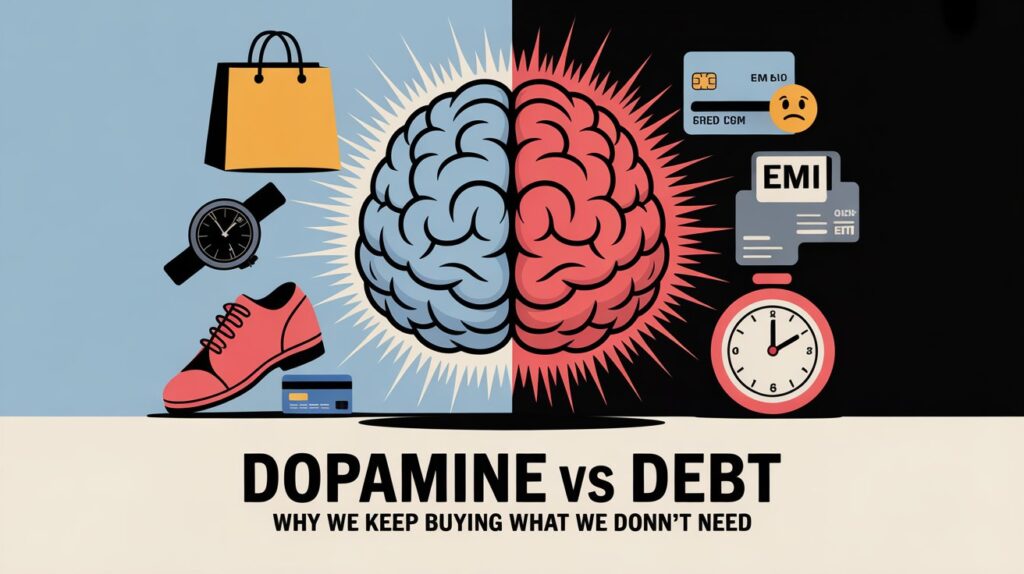
Every purchase, especially a luxury one, triggers a dopamine hit. That feeling of excitement, anticipation, reward. But here’s the trick: dopamine doesn’t last.
What sticks around is the EMI. And the mental burden of knowing you’ve committed your future income for something you probably won’t value a few months down the line.
And companies know this. That’s why you’ll often see two ads right next to each other:
One for an expensive watch. Another offering you a loan against your house.
Coincidence? Maybe.
But psychologically? It’s the perfect storm.
India’s Savings Crisis: A Slippery Slope
Here’s where things get serious.
India’s gross savings rate, the money households save as a percentage of GDP has been sliding for a decade. It fell from 35% in 2012 to just 30.7% in 2023.
That may not sound alarming… until you realize how quickly it compounds.
This isn't just a personal finance problem. It’s an economic vulnerability.
- Household debt as a % of gross disposable income is now at a 10-year high of 6.1%.
- Growth in personal loans has outpaced income growth.
- The BNPL ecosystem is growing faster than many consumer goods categories.
And it’s not just metros anymore. Thanks to e-commerce and digital credit, Tier 2 and Tier 3 cities are buying just as indulgently, from premium iPhones to ₹5-lakh handbags, often on borrowed money.
Borrowing for Lifestyle vs. Borrowing for Assets
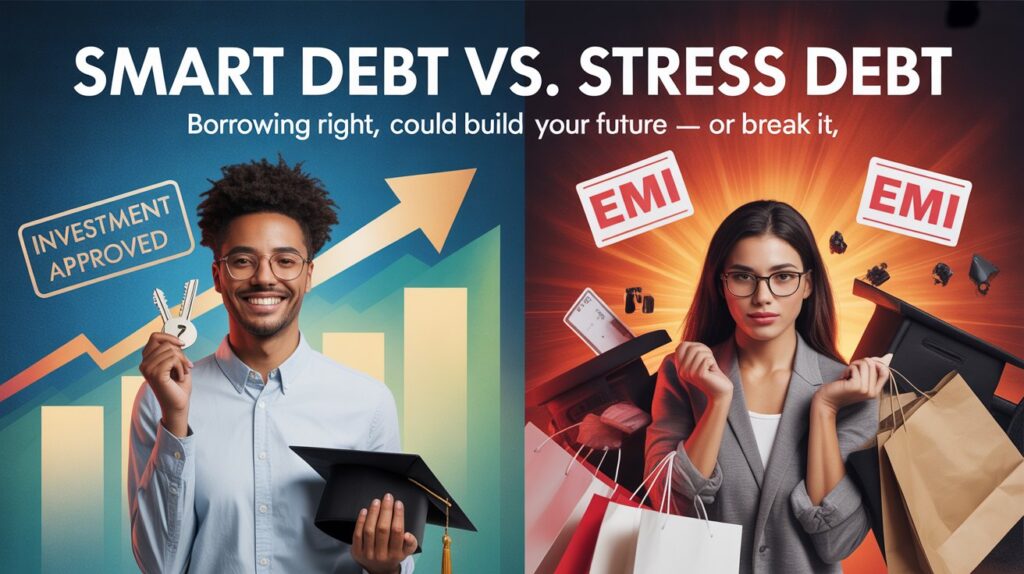
Let’s be very clear here: not all debt is bad.
If you borrow to:
- Buy a house
- Start a business
- Fund higher education
- Purchase a car that helps you earn income
You’re using money as leverage to build an asset or capability that gives long-term returns.
But if you’re borrowing to:
- Buy a ₹7 lakh sneaker
- Fund a party vacation to Bali
- Upgrade from iPhone 14 to 15 because “camera is better”
Then you're using debt as a consumption trap, trading your future security for instant validation.
And it never ends with one swipe. Lifestyle inflation is addictive, and you’ll always find a reason to want a little more.
What Happens When the Music Stops?
Imagine this: You're 60. You’re not earning anymore. Maybe you want to take a spiritual trip. Maybe help your kids start their business. Or simply have the dignity to live without asking anyone for money.
But all you have left is...
- A wardrobe full of designer clothes
- EMIs that drained your prime saving years
- And no investment corpus to speak of
This isn’t fiction. It’s the reality many are walking into, eyes wide open, hoping that “tomorrow will somehow figure itself out.”
Let’s be blunt: Tomorrow doesn’t fix itself unless you plan for it today.
But Doesn’t Spending Help the Economy?
Yes, increased consumption does boost GDP in the short run. But reckless, debt-fueled consumption creates fragility.
We’ve seen this before.
- In 2008, it was the subprime mortgage crisis in the US, driven by people who borrowed too much, too easily.
- In India, we’re not at crisis levels, but rising consumer credit without corresponding income growth is a red flag.
So, when personal loan growth moderates, as it did in FY25 at 11.1%, lower than previous years, that’s actually a good sign from a personal finance and macro stability lens.
So, What’s the Smarter Play?
Here's the practical middle ground:
- Budget for indulgences, don’t borrow for them.
- Keep a simple rule: If it won’t matter in 5 years, don’t pay for it over 12 months.
- Build a savings rate of at least 20–30% of monthly income, automate it before you spend.
- Invest in assets that appreciate, not liabilities that depreciate.
- Think long-term freedom, not short-term flex.
Because trust me, peace of mind compounds way better than dopamine.
Final Thought: Don’t Be the Economy’s ATM
Yes, your spending fuels the economy.
But if you're constantly living paycheck to paycheck to keep the engine running, who's really benefiting? The brands? The banks? The credit card companies?
Or you?
There’s no harm in living well.
But make sure you're not mortgaging your future to enjoy the illusion of luxury today.
You owe yourself better.

