the GST Council, during its 56th meeting, has approved sweeping changes to India’s indirect tax regime, calling it the “next-gen GST reform.” Starting September 22, India will shift from the four-slab structure to a simplified two-slab system of 5% and 18%, with luxury and sin goods attracting a special 40% rate.
What Changes for Consumers
For middle-class households, the relief is significant.
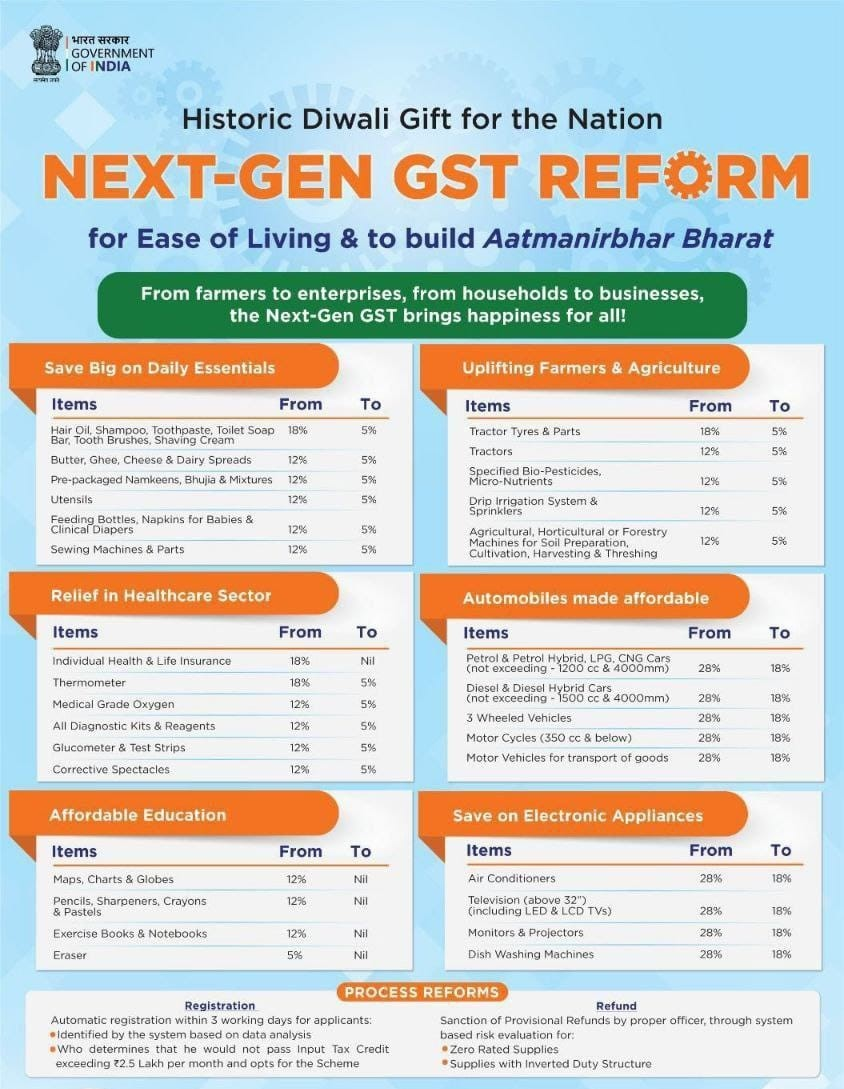
- Daily essentials like soaps, shampoos, toothpaste, bicycles, packaged paneer, and rotis will either move to the 5% bracket or become GST-free.
- Consumer durables such as TVs, ACs, refrigerators, small cars, and two-wheelers will now attract 18% GST, down from 28% earlier, making them more affordable.
- Insurance premiums and 33 essential drugs are now fully GST-exempt, while all other medicines and devices are taxed at just 5%.
Luxury and Sin Goods Get Costlier
While the reform benefits mass consumption, the luxury segment will pay more. Tobacco, aerated drinks, and high-end cars will now attract 40% GST, making them significantly pricier.
Economic Impact & Rationale
The ₹48,000 crore revenue hit to the Centre and states is expected to be offset by a boost in consumption, especially during the festive season. By reducing compliance complexity, the two-slab system aims to make GST filing easier for businesses, encourage better tax compliance, and stimulate demand across sectors.
Why This Matters
This is one of the biggest GST reforms since its launch in 2017. The timing just ahead of Diwali, signals a push to support the middle class and revive consumer sentiment. Lower taxes on essentials and durables could drive higher discretionary spending, benefitting sectors such as FMCG, consumer durables, and automobiles. However, the luxury goods segment may face a short-term slowdown due to higher taxation.
Investor Perspective
Listed companies in the FMCG space (HUL, Dabur, Marico), consumer electronics (Voltas, Havells), and auto (Hero MotoCorp, Maruti Suzuki) could see volume growth in Q3 and Q4, aided by lower effective prices. Insurers may also benefit from higher policy adoption due to the removal of GST on premiums.