"Carbon is the new currency of the 21st century." As climate change accelerates, the world is placing a price on pollution, turning carbon emissions into a tradable asset. The global carbon credit market is projected to reach $100 billion by 2030, reflecting the growing demand for sustainable solutions.
From multinational corporations to individual investors, stakeholders are entering the carbon trading space—where environmental responsibility meets financial opportunity. But how does this market work, and why is it gaining momentum? Let’s explore the rise of carbon credit trading and its role in shaping a greener economy.
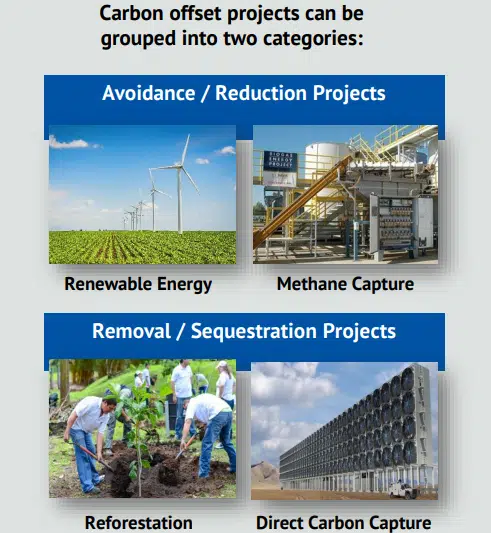
A carbon market enables investors and corporations to trade carbon credits and offsets simultaneously, addressing the environmental crisis while unlocking new market opportunities. As challenges like the climate crisis and rising global emissions emerge, they inevitably give rise to new markets.
Carbon credits, also known as carbon allowances, work like permission slips for emissions. When a company buys a carbon credit, usually from the government, they gain permission to generate one ton of CO2 emissions. With carbon credits, carbon revenue flows vertically from companies to regulators, though companies who end up with excess credits can sell them to other companies.One carbon credit typically represents the right to emit one metric ton of CO₂.
Offsets flow horizontally, trading carbon revenue between companies. When one company removes a unit of carbon from the atmosphere as part of its normal business activity, it can generate a carbon offset. Other companies can then purchase that carbon offset to reduce their own carbon footprint.
One major benefit of carbon offsets is the potential for significant revenue for companies selling them. Tesla, for instance, earned $1.78 billion from selling carbon credits to traditional car manufacturers in 2023. This revenue stream highlights the growing role of carbon credits in corporate strategies. For Tesla, these credits have been crucial in maintaining profitability. If the carbon credit market continues to grow and price rises, companies like Tesla, which contributes to environmental sustainability, could see substantial financial gains.
Carbon Credits: The Asset You Can’t See, Store, or Ship
- Carbon credits are an unusual type of commodity. They aren’t physical, so they don’t need to be shipped or stored in the same way as oil or grain. They also operate in a largely unregulated environment, making their exact value hard to gauge and subject to fluctuations even after purchase.
- There are key similarities to traditional commodities, though. Carbon credits represent a physical asset, requiring quality control, verification, and project management.
Fueling a Greener Future: How Companies Are Investing in Carbon Credits
- To finance carbon removal and avoidance, a growing number of companies are purchasing carbon credits in the voluntary carbon market (VCM).
- Organizations and individuals can purchase these credits via select growth tech platforms to pay for “carbon offsetting”—the act of applying for the credits against an internal accounting of carbon dioxide equivalent (CO2e) emissions to compensate for those emissions with the removal or avoidance of other CO2e emissions through activities such as reforestation, the reduction of methane emissions, and avoided deforestation.
- Some companies purchase carbon credits through the VCM but do not use them to offset emissions, instead using these purchases as a way to make a broader contribution to climate change mitigation.
Building a Carbon Credit Project: The Road from Approval to Trade
- Before a carbon credit project can be set up, detailed documentation must be submitted to a regulating body – either private or governmental – explaining its scale and scope. Crucially, this includes an estimate of how many carbon credits the project will generate, typically calculated annually, though some projects assess this across their entire lifecycle.
- Independent auditors periodically verify the project’s performance, ensuring the actual emissions reductions align with the projections. Based on these results, credits are issued accordingly.
- The credits can then be sold on digital marketplaces to businesses looking to reduce their reported emissions. In theory, a company that buys enough credits to offset its whole carbon footprint can label itself carbon neutral without making any changes to its operation
- One is a regulated market, set by “cap-and-trade” regulations at the regional and state levels.
- A regulated market, often governed by "cap-and-trade" systems, is a market where emissions are capped at a set limit. Companies and organizations are allocated a certain number of carbon credits based on their emissions allowance.
- If they emit more than their allotted amount, they must purchase additional credits from others who have emitted less. This system is typically enforced at regional or national levels, driving companies to reduce emissions and trade credits to stay within the limits.
Voluntary Market:
- The other is a voluntary market where businesses and individuals buy credits (of their own accord) to offset their carbon emissions.
- The voluntary carbon market for offsets is currently smaller than the compliance market but is projected to expand significantly in the coming years.
- Unlike the regulated market, it is open to individuals, companies, and organizations seeking to reduce or neutralize their carbon footprint voluntarily, rather than due to legal requirements.
- Consumers can purchase offsets to counteract emissions from specific high-carbon activities, such as long flights, or opt for regular offset purchases to balance their overall carbon footprint continuously.
| Compliance or Regulated | Voluntary |
|---|---|
| Markets for carbon credits created by the need to comply with a regulatory act (carbon allowances). | Corporations, governments, and individuals volunteer to offset their emissions by purchasing carbon credits (carbon credits, also referred to as offsets). |
| Emission Trading Systems (ETS) | Carbon Credits / Offsets |
| - Also referred to as cap-and-trade programs. | - Generated by projects that avoid, reduce, or remove GHG emissions beyond a business-as-usual scenario. |
| - The "cap" on GHG emissions declines annually to achieve the climate policy targets of its jurisdiction or members. | - Projects include reforestation, improved forest management, wetland restoration, and renewable energy. |
| - Allowances are freely allocated or auctioned to companies, which can then "trade" allowances to comply with the cap on their emissions. | - Traded by individuals and companies on the voluntary markets (though some carbon offsets can also be used in select compliance markets). |
| - Companies with low emissions can sell their extra allowances to larger emitters. | - Majority of projects follow rules established by independent standards bodies. |
Low-Risk, High-Impact: How Funds Simplify Carbon Market Investments
- The global compliance market for carbon credits is massive. According to Refinitiv, the market has grown substantially, reaching a trading value of approximately $1.5 trillion in 2024, up from $950 billion in 2023. This represents about 15.7 gigatonnes of CO2 equivalent traded across various compliance markets worldwide.
- One of the simplest and lowest-risk ways to invest in the carbon markets is through a mutual fund. As many such funds have diversified holdings, this helps to reduce the risk of investing in one, although in exchange, your potential return will also be lower.
- Examples of such funds include the iShares MSCI ACWI Low Carbon Target ETF (CRBN), or BlackR’s U.S. Carbon Transition Readiness ETF (LCTU).
- The European Union Emissions Trading System (EU ETS) remains the largest market, followed by China’s national ETS.
Carbon offset/carbon credit market size worldwide in 2022, with a forecast to 2028

(in billion U.S. dollars)
Source: https://www.statista.com/statistics/1399837/global-carbon-offset-credit-market-size/

The S&P Global Carbon Credit Indices use a Capped Volume Weighted methodology and are rebalanced annually in November. Calculated end-of-day (EOD) in USD, the index was launched on July 25, 2019, with a first value date of July 31, 2014. It follows the S&P Global Carbon Credit Indices Methodology and is tracked via Bloomberg (GLCARBP) and REUTERS (.GLCARBP) tickers.
